Click on the following for earlier articles in the series: Part 1, Part 2, Part 3, Part 4, Part 5, Part 6, Part 7, Part 8 and Part 9.
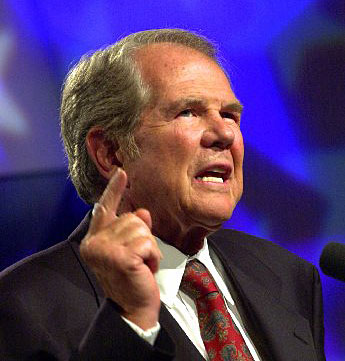
 Now, let’s consider some questions about Robertson’s remarks on Haiti:
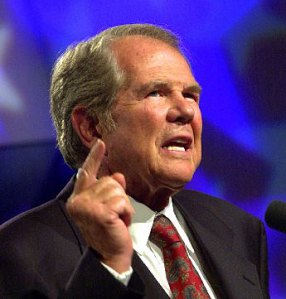
1. Who were Robertson’s remarks about? Haiti and its inhabitants.
2. What audience was Robertson’s remarks actually directed at? Approximately 750,000 American Christian TV viewers, with the largest portion of them being Pentecostal/Charismatic Christians.
3. How did Robertson’s remarks mushroom into being the fourth largest topic on the internet and in mainstream media? For years, critics have audited The 700 Club program for juicy comments by Robertson. These remarks were obviously chosen to show a controversial Christian slant on the Haitian earthquake calamity.
4. Did any of Robertson’s media critics have any scriptural or historical knowledge to base their criticisms on? Most likely not, as no one referenced anything along these lines.
5. What about the American Christian leaders who were critical of Robertson’s remarks? It’s interesting to note that the Christian leaders who were interviewed about his remarks were not from the Pentecostal/Charismatic stream of Christianity. Instead, they were mainly Evangelical Christians who have a much different view on curses than Robertson’s viewpoint. Wouldn’t it have been better, and less biased, to have asked John Hagee, Rod Parsley, Joyce Meyer or other like leaders for their opinions?
6. What did the Haitians feel about Robertson’s remarks? Actually, Haitians would not have known except for being asked by aggressive news people. After all, Haitians had bigger problems than Robertson’s remarks on their minds. (Check out Haitian Ambassador’s non-response.)
7. Do Haitian Christians take Haiti’s supposed pact with Satan and the more than two-hundred year curse serious at all? In August, 1997, two hundred and six years after the supposed pact with Satan by Boukman Dutty at Bois Caiman, Haitian Christians, not only in Haiti, but also in the U.S. and Canada, began fasting and praying against the curse.
Then on August 14, 1997, Christians marched for six hours from the Presidential Palace to the tree where the pig was supposedly sacrificed. They prayed, asking the Lord to use Bois Caiman as a place of prayer.
Also, in 2004, during Haiti’s bicentennial celebrations, Pastor Jean Chavannes Jeune and other Christian leaders led a national campaign “to break the Voodoo curse” on the nation. At the first ever prayer breakfast at the national palace in Port-au-Prince, the leaders claimed that “going forward Haiti would be a Christian nation.”
All of the leaders believed by faith the curse had been broken.
8. Finally, what do Voodoo priests and followers think about Haiti’s supposed pact with Satan and the curse? Ever since 1791, Voodoo priests and followers view Bois Caiman as a holy place where Satan accepted Boukman Dutty’s pig sacrifice. They gather there every August 14th and offer animal sacrifices to Satan.
So, what about the supposed curses on Haiti?
(Continued in Part 11)