
I have just posted Episode 3 of Flee California Now on Youtube. It is entitled, “Train Like You Fight”
You can check out the video here:
https://www.youtube.com/watch?v=CFzCBNF-26E
Check it out, especially if you live in California.
Thanks
I have just posted Episode 3 of Flee California Now on Youtube. It is entitled, “Train Like You Fight”
You can check out the video here:
https://www.youtube.com/watch?v=CFzCBNF-26E
Check it out, especially if you live in California.
Thanks
Filed under California, Christianity, Church, Prayer, Prophecy
What is the first thought that enters your mind when the word “prophet” is mentioned? Do you instantly think of a wild-haired, bearded man wearing coarse camel-hair clothing with a leather belt, bursting onto the scene, much like an Elijah or John the Baptist?
Or do you think of our Lord Jesus walking through crowds of people and ministering to them?
And the crowds said, “This is the prophet Jesus, from Nazareth of Galilee.” (Matthew 21:11)
Most Christians can easily picture pastors, teachers, and evangelists as ministries for the Lord, but then we struggle with the ministry of the prophet. The main reason for our struggles are the more than fifty-five examples of prophets mentioned in the Old Testament. These were the main characters, and with the exception of Jesus, we know more about the Old Testament prophets’ ministries than all of the other ministries in the whole Bible combined.
What do we really know about the ministry of the pastor, teacher, or evangelist? Very little.
But what do we know about the ministries of the Old Testament prophets:
1. The prophets were God’s mouthpiece to the people of Israel and other nations. There were no ifs, ands, buts, whys, howevers, therefores, or testings of the prophets’ words. All words were to be accepted as from the Lord. Period.
2. If the prophets’ words failed to take place, the people were not to fear them.
3. If the prophets’ words led people away to follow other gods, then the prophets were to be killed.
4. The Spirit of the Lord came upon prophets (also a few kings and priests) to prophesy.
6. The Old Testament prophets suffered heavy afflictions because of their prophecies.
I do not want to understate the value of studying the Old Testament prophets because there is much to be gleaned from studying them. Yet, we need to view their ministries through the light of the cross. The Apostle Paul wrote:
These are a shadow of the things to come, but the substance belongs to Christ. (Colossians 2:17)
So, what about New Testament prophets and prophecy?
(Continued in Part 6)
Filed under Christianity, Church, Prophecy, Spiritual gifts
Prophecy may arise from three different beings: the Holy Spirit, demons or our own imaginations (our flesh). And it’s even possible for a prophecy to be a mixture of all three at the same time.
Now, don’t throw your hands up in the air and give up because it sounds too tough. Let’s see what the Apostle Paul says:
Pursue love, and earnestly desire the spiritual gifts, especially that you may prophesy. (1 Corinthians 14:1 ESV)
So, my brothers, earnestly desire to prophesy, and do not forbid speaking in tongues. (1 Corinthians 14:39 ESV)
The Greek word zēloō is translated into the English language as earnestly desire in the English Standard Version, but it more nearly means “to boil over with zeal and envy for something.”
How many of us actually wake up in the morning or walk into churches boiling over with zeal to prophesy? Probably not many of us, but actually the Apostle Paul states that this should be our attitude.
So, how can we do this and still follow Paul’s advice of “doing everything decently and in order?“
The answer is simple: allow ourselves and others the opportunities to make mistakes. Period.
We must remove two mindsets to do this:
First, never frame a prophecy by saying, “Thus saith the Lord.” Now, we may feel like every word has come down from the throne of God, but still, it’s up to others to judge it. Be humble, be a servant. Allow the Holy Spirit to raise us up.
Second, get over the importance of appearing as a mature believer to others. Remember: humbling ourselves as little children is the road to greatness in the kingdom of God.
Spiritual discernment will only come for each of us through practice and giving grace to ourselves and others.
In light of Old Testament scriptures, how can we allow someone to make mistakes with prophecies?
(Continued in Part 5)
Filed under Christianity, grace, Prayer, Prophecy, spiritual warfare
I have just posted Episode 3 of Flee California Now on Youtube. It is entitled, “Must haves if You are not Fleeing California Now.”
You can check out the video here:
https://www.youtube.com/watch?v=TD0t5lImzQA
Check it out, especially if you live in California.
Thanks
Paul and Silas were clicking along from city to city until the Holy Spirit forbid them from heading north into Bithynia. They instead responded to a vision that Paul had about a man who said, “Come over to Macedonia and help us.“
The twosome hurried to Troas, boarded a ship to cross the northern tip of the Aegean Sea, and landed in Neapolis. They then journeyed thirteen miles by foot to Philippi.
The city of Philippi had a population of 2000 people and a large Roman garrison. It was the chief city in the province of Macedonia, but the Jewish population was too small to support a synagogue, which required ten Jewish men.
Thus, Paul and Silas searched for and found a Jewish prayer meeting along the banks of the Gangites River. The two spoke to the Jewish women attending the meeting where a woman named Lydia was converted and baptized as a believer in Christ. Paul and Silas then stayed at Lydia’s house.
All of this sets the stage for a powerful scene.
As we were going to the place of prayer, we were met by a slave girl who had a spirit of divination and brought her owners much gain by fortune-telling. She followed Paul and us, crying out, “These men are servants of the Most High God, who proclaim to you the way of salvation.” (Acts 16:16-17)
If we use our New Testament Bibles – which Paul and Silas did not have at the time – how would we judge the accuracy of the slave girl’s prophetic words? We would have to admit that the girl’s words were accurate because Paul and Silas were God’s servants and did proclaim the gospel.
Yet, Paul was greatly annoyed by the slave girl’s proclamations and said to the spirit in the girl:
“I command you in the name of Jesus Christ to come out of her…” (Acts 16: 18)
As the Apostle Paul demonstrated in this scene, spiritual discernment is a two-sided coin. On the one hand, we need to know if the prophetic words line up with scripture, and on the other hand, we need to know what spirit backs the prophetic words. Is it the Holy Spirit, a demon or our own fleshly spirit?
How can we do this?
(Continued in Part 4)
Filed under Christianity, Church, Gifts of the Spirit, Prophecy, spiritual warfare
Let’s break down the process of speaking a prophecy from my experience, okay?
When I prophesy, I first feel a nudge in my inner man from the Holy Spirit to speak something. Along with my nudge or inner witness, I usually have the opening words, which may be something like, “I believe the Lord wants to speak to us…” As I speak the opening words, a few more words are given to me by the Holy Spirit and then more words gush through me as I speak, until I finish.
There are a few inner things happening in me while I prophesy.
On the one hand, I’m trying to listen to the Holy Spirit and speak His words in a similar manner. If He is cheerful, I want to be cheerful. If He is sober, I want to speak in the same way. Etc. Etc.
At the same time, I am trying to check my words against scripture because every prophetic word must line up with the Bible and its intent. If my words do not line up, they should be judged as false.
So, I like to think of myself as a computer with a few tabs open while I am prophesying.
Don’t worry!
It’s not as hard as it sounds because the Holy Spirit is doing the heavy work. I am just a vessel allowing Him to work through me. He fully understands my capabilities, my insecurities, my audience and my faith level. He then gives me more than enough grace to handle all of this.
Now, whether or not you prophesy like I do really doesn’t matter because we are all unique individuals. Allow Him to train you to prophesy according to the measure of faith that God has assigned you.
Okay, what about spiritual discernment?
(Continued in Part 3)
Filed under Christianity, Church, Faith, Gifts of the Spirit, Prophecy, Spiritual gifts
I have just posted Episode 2 of Flee California Now on Youtube. It is entitled, “What You Should Do if You are not Fleeing California Now.”
You can check out the video here:
https://www.youtube.com/watch?v=WJT3Kcy_hTE
Check it out, especially if you live in California.
Thanks.
Filed under Calamities, California, Christianity, Earthquakes
A friend sent me an email with a YouTube video link by an evangelist who talked about the New World Order, 6000 FEMA camps in America, pastors pledging allegiance to the New World Order, railroad cars moving Christians to camps and countless other statements
I listened to three or four minutes of the video and turned it off.
Then, I gritted my teeth and listened to the full message. Did I feel any better after listening to the twenty-six minute message? No, absolutely not. It still felt like ice water dripping on my inner spirit.
There is no doubt the evangelist has a prophetic gifting, sincerely loves the Lord and has a little bit of truth mixed into her message. But just because a person talks about dreams, visions, prophetic words, has a few revelations and inserts some scriptures along the way, are we supposed to accept her message as an inspired word of the Lord?
So let two or three prophets speak [those inspired to preach or teach], while the rest pay attention and weigh and discern what is said. (1 Corinthians 14:29 AMP)
It is not just the responsibility of leaders to discern whether prophecies are accurate words of the Lord. We all are called to do this. Why? Because the Holy Spirit dwells in each of us and does not just fall upon prophets, kings and priests as in the Old Testament.
Okay, let’s be honest with ourselves.
Most of our spiritual ears have been dulled by the world around us, by our teachings, by our dependence on leaders, by television and movies and by countless other things. Our spiritual discernment is probably at its lowest level right now.
So, what can we do to sharpen our spiritual discernment?
(Continued in Part 2)
Filed under Christianity, Gifts of the Spirit, Prophecy
What is the plan of action for healing a sufferer of dementia?
Pursue love, and earnestly desire the spiritual gifts, especially that you may prophesy. (1 Corinthians 14:1 ESV)
In Part 4, I wrote:
Without the gifts of the Spirit, none of this would have happened. The woman with Tourette Syndrome would not have been healed and her daughter-in-law would not have had a baby girl.
The gifts involved in these two miracles were the gift of faith, the gift of discerning of spirits and the gift of prophecy.
I had another Holy Spirit experience over thirty-five years ago. It happened when I was preaching at a small house group. A woman showed up that night, suffering from muscular dystrophy. She used a cane and hobbled over to a chair and sat down.
When I finished my message, I walked over to her, reached out my hand and said, “Let’s dance.”
She took my hand and danced with me around the family room. After a minute or so, I stopped and looked at her. “What do you think?” I said.
Her eyes opened wide. “Oh Lord, I’m healed!” she proclaimed.
The woman carried her cane home, totally healed. The next day, she enrolled at a gym to get herself back in shape.
This happened through the gift of faith and the gift of working of miracles.
None of this was through my efforts. It was the manifestation of the Holy Spirit working in me.
If I could turn the gifts on when I wanted to, I would, but it doesn’t work that way. The Holy Spirit determines when He will manifest Himself in believers, and not us.
Here’s my thinking:
If we want to be used by the Lord to heal dementia sufferers, we need to eagerly pursue the spiritual gifts. All of them. I just don’t believe there is any other option.
Also, it’s my belief that dementia/Alzheimer’s is caused by demons. And I think these demons have built up strongholds in our minds so that very few believers are praying for dementia sufferers to be healed.
Thus, like Jesus said about casting out the demon in the young boy, “But this kind never comes out except by prayer and fasting.” (Matthew 17:21)
It will take the Spiritual gifts, faith, prayer and fasting.
How much fasting? Seek the Lord.
(Conclusion)
Filed under Christianity, Deliverance, Faith, Fasting, Gifts of the Spirit, Healing, Prayer, Prophecy
My new podcast is named Flee California Now! Episode #1 is now available on YouTube and is entitled, “Why would anyone name their podcast Flee California Now?
You can see the video here: https://www.youtube.com/watch?v=tjwQPOoeScE
Check it out, especially if you live in California.
Thanks.
Filed under California, Christianity, Church, Judgment, Kingdom of God, Prophecy, spiritual warfare, Uncategorized

$2.99 on Amazon for Kindle and Kindle Apps

$4.99 on Amazon for Kindle and Kindle Apps

$4.99 on Amazon for Kindle and Kindle apps
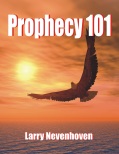
$4.99 on Amazon for Kindle and Kindle apps
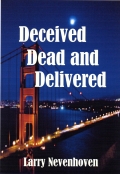
$4.99 on Amazon for Kindle and Kindle apps
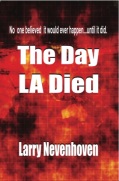
$4.99 on Amazon for Kindle and Kindle apps

$4.99 on Amazon for Kindle and Kindle apps
Free downloads or read online

 Larry Who