Category Archives: Gifts of the Spirit

Churches: Fellowships Without Fellowship (Part 6)


Continuing with Wolfgang Simson’s 15 Theses from his book, House Churches That Change the World:

9. Return from organized to organic forms of Christianity

The “Body of Christ” is a vivid description of an organic, not an organized, being. Church consists on its local level of a multitude of spiritual families, which are organically related to each other as a network, where the way the pieces are functioning together is an integral part of the message of the whole.

What has become a maximum of organization with a minimum of organism, has to be changed into a minimum of organization to allow a maximum of organism. Too much organization has, like a straightjacket, often choked the organism for fear that something might go wrong. Fear is the opposite of faith, and not exactly a Christian virtue. Fear wants to control, faith can trust. Control, therefore, may be good, but trust is better.

The Body of Christ is entrusted by God into the hands of steward-minded people with a supernatural charismatic gift to believe God that He is still in control, even if they are not. A development of trust-related regional and national networks, not a new arrangement of political ecumenism is necessary for organic forms of Christianity to reemerge

10. From worshipping our worship to worshipping God

The image of much of contemporary Christianity can be summarized as holy people coming regularly to a holy place at a holy day at a holy hour to participate in a holy ritual lead by a holy man dressed in holy clothes against a holy fee.

Since this regular performance-oriented enterprise called “worship service” requires a lot of organizational talent and administrative bureaucracy to keep going, formalized and institutionalized patterns developed quickly into rigid traditions. Statistically, a traditional 1-2 hour “worship service” is very resource-hungry but actually produces very little fruit in terms of discipling people, that is, in changed lives. Economically speaking, it might be a “high input and low output” structure.

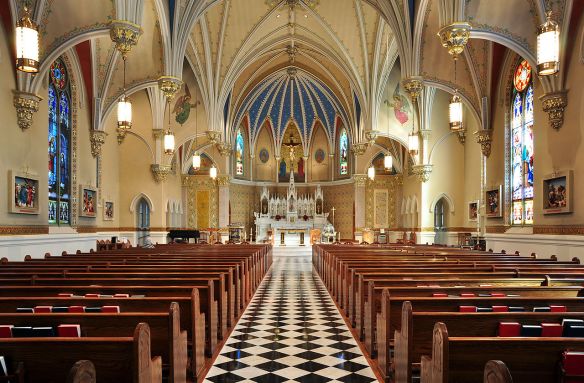
Traditionally, the desire to “worship in the right way” has led to much denominationalism, confessionalism and nominalism. This not only ignores that Christians are called to “worship in truth and in spirit,” not in cathedrals holding songbooks, but also ignores that most of life is informal, and so is Christianity as “the Way of Life.”

Do we need to change from being powerful actors to start “acting powerfully?”

11. Stop bringing people to church, and start bringing the church to the people 

The church is changing back from being a Come-structure to being again a Go-structure. As one result, the Church needs to stop trying to bring people “into the church,” and start bringing the Church to the people. The mission of the Church will never be accomplished just by adding to the existing structure; it will take nothing less than a mushrooming of the church through spontaneous multiplication of itself into areas of the population of the world, where Christ is not yet known.

12. Rediscovering the “Lord’s Supper” to be a real supper with real food

Church tradition has managed to “celebrate the Lord’s Supper” in a homeopathic and deeply religious form, characteristically with a few drops of wine, a tasteless cookie and a sad face. However, the “Lord’s Supper” was actually more a substantial supper with a symbolic meaning, than a symbolic supper with a substantial meaning. God is restoring eating back into our meeting.

(Continued in Part 7…but if you want to read all of the parts to date, you can go here.)

2 Comments

Filed under America, Christianity, Church, End-Times, Gifts of the Spirit, Home Church, Kingdom of God, Prayer, Prophecy, Spiritual gifts, spiritual warfare

Prayers for the American Church (10/2/2018)

Christ Church Stellarton

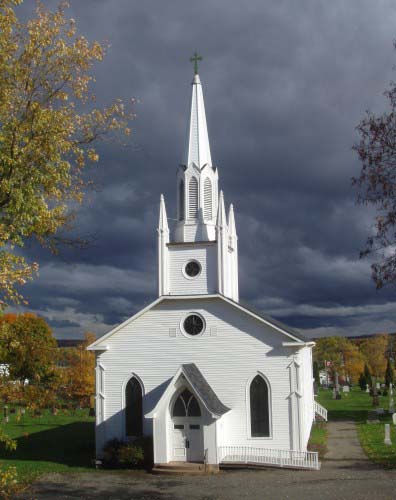
Photograph of Christ Anglican Church, Stellarton, NS. Taken the morning of October 28, 2005

“Do you believe the Bible is the “inspired” Word of God?”

Almost every Evangelical Christians will answer “Yes” to this question and will then quote his or her favorite verses, such as John 3:16, Ephesians 2:8 and Psalm 34:19.

But if you ask Christians whether they believe in Pre-Tribulation Rapture or Post-Tribulation Rapture, 90% of them will answer: “Pre-Tribulation Rapture.”

If you then ask them, “How can you justify your beliefs in light of Paul’s writing in 1 Corinthians 15:52 and John’s words in Revelation 11:15-19?”

Most of the 90% will answer: “Pre-Trib Rapture is what my pastor teaches and I trust him.”

Is this really a big deal?

Well, it’s not a big deal to all of the believers who have died before today. Their beliefs on the rapture did not hinder their faith one way or the other.

Yet, those believers who are alive right now have a chance of being a part of those who are raptured when Christ returns. And if not us, maybe our children or grandchildren will be in the rapture.

So, yes, it’s a big deal, especially because the Apostle Paul wrote:

Let no one deceive you by any means; for that Day will not come unless the falling away comes first, and the man of sin is revealed, the son of perdition (2 Thessalonians 2:3)

I don’t know about you, but I don’t want be deceived and fall away, nor do I want my children or grandchildren to fall away. I want them and myself to be prepared to fight the good fight, finish the race and keep the faith all the way to the end.

There are more than 150 chapters about end-times prophecy in the Bible. That’s over sixty more chapters than the total combined chapters of Matthew, Mark, Luke and John. Thus, as you can see, God has placed an emphasis on the end-times. Shouldn’t we at least  study and prepare ourselves, just in case our theology is wrong?

My prayer today:

Lord, open the eyes of the American church so that they are like the Bereans who searched the Scriptures to discover the truth for themselves rather than like the Thessalonicans who relied on their leaders’ teachings. (Based on Acts 17:10-11)

Join me on Tuesdays to fast and pray for the American church.

4 Comments

Filed under America, Christianity, Church, End-Times, Fasting, Gifts of the Spirit, Kingdom of God, Prayer, Prophecy, spiritual warfare

Churches: Fellowships Without Fellowship (Part 4)

In his book, House Churches that Change the World, Wolfgang Simson stole a page from Martin Luther’s reformation playbook and wrote a 15 Theses for the house church movement:

1. Christianity is a way of life, not a series of religious meetings.

Before they were called Christians, followers of Christ were called ‘The Way.’ One of the reasons was that they had literally found the way to live. The nature of the church is not found in a constant series of religious meetings led by professional clergy in holy places specially reserved to experience Jesus. Rather, it is the prophetic way followers of Christ live their everyday life in spiritual extended families, as a vivid answer to the questions that society asks, and in the place where it counts most – in their homes.

2. Time to change the ‘cathegogue system’

The historic Orthodox and Catholic Church after Constantine in the fourth century developed and adopted a religious system based on two elements: a Christian version on the Old Testament temple – the cathedral – and a worship pattern styled after the Jewish synagogue. They thus adopted, as the foundational pattern for the times to follow, a blueprint for Christian meetings and worship which was neither expressly revealed nor ever endorsed by God in New Testament times: the ‘cathegogue,’ linking the house-of-God mentality and the synagogue.

Baptized with Greek pagan philosophy, separating the sacred from the secular, the cathegogue system developed into the Black Hole of Christianity, swallowing most of its society-transforming energies and inducing the church to become absorbed with itself for centuries to come. The Roman Catholic Church went on to canonize the system.

Luther reformed the content of the gospel but left the outer forms of ‘church’ remarkably untouched. The Free Churches freed the system from the State, the Baptists then baptized it, the Quakers dry-cleaned it, the Salvation Army put it in uniform, the Pentecostals anointed it and Charismatics renewed it, but until today nobody has really changed the system. The time to do that has now arrived.

3. The third Reformation

In rediscovering the gospel of salvation by faith and grace alone, Luther started to reform the church through a reformation of theology. In the eighteenth century, through movements in the pietistic renewal, there was a recovery of a new intimacy with God, which led to a reformation of spirituality, the Second Reformation. Now, God is touching the wineskins themselves, initiating a Third Reformation, a reformation of structure.

4. From church houses to house churches

From the time of the New Testament there has been no such thing as a ‘house of God.’ At the cost of his life, Stephen reminded us: God does not live in temples made by human hands.

The church is the people of God. The church, therefore, was and is at home where people are at home: in ordinary houses. There the people of God share their lives in the power of the Holy Spirit, have ‘meatings’, i.e. they eat when they meet; they often do not even hesitate to sell private property and share material and spiritual blessings; they teach each other in real-life situations how to obey God’s Word – and not with professional lectures but dynamically, with dialogue and questions and answers. There they pray and prophesy with each other, and baptize one another. There they can let their masks drop and confess their sins, regaining a new corporate identity through love, acceptance and forgiveness.

(Continued in Part 5…but if you want to read all of the parts to date, you can go here.)
Leave a comment

Filed under America, Christianity, Church, Gifts of the Spirit, Home Church, Kingdom of God, Prayer, Prophecy, Spiritual gifts, spiritual warfare

Churches: Fellowships Without Fellowship (Part 2)


Why did God pour out the ten plagues on Egypt?

It all began almost thirty-five hundred years ago with Moses having a burning bush experience. It was there that God said, “I have seen the oppression of My people and have heard their cry because of their taskmasters. So I have come down to deliver them out of their bondage and bring them to a land flowing with milk and honey.”

Moses eventually accepted His calling and headed for Egypt.

When Moses arrived in Egypt, he met with the elders and told them how God was going to set the Israelites free. The elders rejoiced, bowed their heads, and worshipped God.

That jubilant attitude by the elders and the Israelites lasted until Moses walked into Pharaoh’s court and said, “Thus says the Lord God of Israel, ‘Let My people go.'”

“Ain’t no way, Moses,” said Pharaoh, “I’m not setting 600,000 male slaves free.”

Next, Pharaoh persecuted the Israelites and beat the officers who were in charge of the Israelite slave workers. Because of the spirit of anguish and cruel bondage, the Israelites no longer listened to Moses.

God did what only God can do, He poured out a powerful anointing on Moses, so that he could confront Pharaoh with boldness and speak truth to the Israelites, which they would listen to and obey.

Over several weeks, God poured out ten plagues on Egypt: blood, frogs, lice, flies, disease on Egyptian livestock, boils on man and beast, locusts, darkness, and death of the first-born. Each plague was aimed at a particular Egyptian god.

Finally, Egypt and its gods were plundered and destroyed by the Lord God of Israel. Pharaoh and the Egyptians said to Israel, “Leave or we will all be dead!”

But God was not quite done yet, He led the Israelites to the Red Sea, which became a trap for them when Pharaoh changed his mind. Pharaoh and his whole army soon followed and drew near to the Israelites.

What did Israel do?

They panicked and said, “Oh dear! Our God is not big enough! We should have lived and died in Egypt as slaves rather than trusting in God.”

But even so, God destroyed the Egyptian army in the Red Sea.

The Israelites danced and sang a new song to the Lord.

Hallelujah!

So, why did God pour out the ten plagues on Egypt?

Yes, the plagues obviously convinced Egypt to let the Israelites go free, but a second reason was that God wanted to set the Israelites free of their desires to ever return to bondage again.

Yet, when the times got tough, Israel always thought about returning to the bondages of Egypt and its cruel gods.

Ah, but there was also a third reason for the plagues.

“Return to Me, O backsliding children,” says the Lord, “for I am married to you…” (Jeremiah 3:14)

Israel was the Lord’s bride, He loved her, and wanted to have a deep relationship with her. He hoped to remove every one of her lovers so He would be the apple of her eye.

Who else is is known as a bride of the Lord?

(Continued in Part 3…but if you want to read all of the parts to date, you can go here.)
Leave a comment

Filed under America, Christianity, Church, End-Times, Gifts of the Spirit, Home Church, Kingdom of God, Prayer, Prophecy, spiritual warfare, Uncategorized

Churches: Fellowships without Fellowship (Part 1)


The Easter Sunday crowd packed the seats in the school gymnasium where the young Four Square Church held its service. The worship team led off with fantastic worship music. One song, Hungry, captured the assembly’s attention, especially its chorus: “So, I wait for you. So, I wait for you.”

The worship team finished as the young, good-looking pastor walked over to the microphone. He clapped his hands in appreciation for the worship team’s efforts. He turned to the assembly, winking an eye at everyone.

“Maybe by now,” he said, “you’ve realized that we’re a little different from all of the other churches in the city…”

The pastor continued on, but I did not hear a single word he said for the next five minutes or so. I was in a different zone, one where the Holy Spirit had my full attention.

“No, this church is not any different than the others,” said the Holy Spirit. “Not one bit different than any of the other churches in the city. If you were, right now, attending a Catholic Church or a Baptist Church or a Pentecostal one or any other church in the city, it would be no different than this one. You would still be sitting here like a bump on a log listening to a head frog croak at you. Your only input into this service will be the check you toss into the offering plate when it is passed under your nose. Is this the church Jesus hung on the cross and died for?”

I sat there, stunned by His words. I wanted to weep. I wanted to run. I wanted to vomit. I wanted to quit, but I did nothing.

Afterward, I told Carol about my experience. She sighed and stared at me.

“You’re sure different, aren’t you?” she said. “I really like this church and now this happens.”

Just so you know, the Holy Spirit was not referring to doctrines at the various churches. If that were the case, each would be different, but instead, He was referring to the wineskin, the particular format, which all traditional churches follow in their churches. They are all basically the same, in that there are definite separations between the active few −the clergy −and the passive many −the laity −who sit in the seats and pay for the privilege to do so.

********

I hurried down West Broad Street in my Ford pickup truck, carrying Toyota parts to a mechanic who needed them right away. As I drove along, I had a graphic vision.

Do you remember iron lungs, which polio sufferers used during the 1950’s? They looked like large cylindrical metal tubes and encased polio victims, helping them to breathe via a pressurized airflow system. The bulky machines filled entire hospital wards during the height of the polio epidemics.

In my vision, the American church system was terminally ill. As a last ditch effort to save its life, the whole church system laid in a white iron lung, gasping for its every breath. The long power cord, attached to the rear of the unit, meandered itself through other electrical cords to a unique power source: money. The life support system was plugged into bags and bags of money.

I stared at the strange sight and then a thundering voice interrupted my thoughts.

“Pull the plug!” proclaimed the voice.

Carol and I prayed about my vision that night. We felt we needed to leave the traditional church system.

Our decision to not attend churches sounds easy now, but at the time, it seemed like we were the only people in the whole nation walking away from churches. A little research on the Internet revealed hundreds of thousands of Americans had done the same thing over the previous years.

Still it was not easy to break our church attending habits. We were used to sitting in pews on Sunday mornings, Sunday evenings, Wednesday evenings, and whenever the church doors opened.

A well-meaning pastor once took me aside and gave one of those lectures no one likes to hear.

“Larry, you need stability in your life and for your marriage,” he said, shaking his head at our nomadic life. “No one will ever take your prophetic ministry seriously if you don’t settle down. You need to settle in a city and find a good church to park yourself so others will take you more seriously. Please, seek the Lord on this advice.”

This vision blew any thoughts about obeying his words out of the water.

(The above excerpts are from my memoir, The Hunt for Larry Who, an Amazon eBook.)

If my two experiences are really from the Lord, what is His eternal purpose in all of this?

(Continued in Part 2)

2 Comments

Filed under America, Christianity, Church, Gifts of the Spirit, Home Church, Kingdom of God, Prayer, Prophecy, spiritual warfare

The Apostles: Men Doomed to Death (Part 5)

praying


Close your eyes and visualize what you think an apostle should look and act like. Do you see him or her like a classy CEO of a corporation, barking orders to underlings? Or like a authoritative general? Or like a prestigious national leader?

We probably all have opinions about apostles.  Some of our beliefs will be based on our cultures and some on our church traditions or teachings.

But how did Paul visualize his calling of apostle?

For, I think, God hath set forth us the apostles last of all, as men doomed to death: for we are made a spectacle unto the world, both to angels and men. (1 Corinthians 4: 9 ASV)

…we have become as the scum of the world, the dregs of all things, even until now. (1 Corinthians 4: 13 NASB)

Not exactly what you had in mind, right? But consider this: our English translations paint a much rosier picture of the apostle than what Paul really visualized when he wrote these verses in his original Greek writings.

Paul actually saw the apostle as a person who was considered by the world as the lowest and worst possible criminal, much like an Adolf Hitler or Idi Amin or a brutal serial killer. A person who the world would not have one drop of pity or empathy for at all.

And if possible, the world would capture the apostle and place him at the end of long procession that would pass by crowds who would taunt, spit on, throw rocks at, dump refuse on, and whatever to belittle the apostle. Why? Because the apostle, in the judgment of the world, deserved this abuse because of his calling.

The long procession would eventually parade itself into an arena where the apostle’s death would be the main attraction for the world’s spectators – and also for angels.

The apostle’s death, as visualized by Paul, would not be a beheading or a firing squad or a hanging. No, those types of executions would be much too civilized for a culprit as evil as the apostle. Instead, wild animals, such as lions and tigers, would be sent into the arena to tear and rip apart the apostle. All the while, the world would be looking on and enjoying the bloody spectacle.

Okay, get the picture?

Now, how would you feel about having an apostle, like the one Paul visualized, come to your church? Would it bother you that the world, maybe your friends, relatives and neighbors, would think of him as an evil criminal? Would you like being linked to his name and assumed to be just as guilty as the apostle because of your association to him?

(Continued in Part 6…but if you want to read all of the parts to date, you can go here.)

1 Comment

Filed under America, Apostles, Christianity, Church, End-Times, Gifts of the Spirit, Kingdom of God, Prayer, Prophecy, spiritual warfare

The Apostles: Men Doomed to Death (Part 4)

praying


A year after my salvation, I had breakfast once a week with three or four Christian men. We fellowshiped, prayed for each other, and usually one gave a short teaching.

The only teaching that I can remember from those breakfasts was given by a young man who stated, “Our heavenly Father is a good God.”

As he said the words, a revelation exploded within me: “Of course, that has to be true because my own earthly father is a great dad. So, my heavenly Father has to be a good God.”

This simple revelation has remained with me for more than thirty-three years. It has comforted me in my worst times, just knowing that God is a good God and that He absolutely loves me.

Over the years, I have been with many different groups and befriended many Christians. All have mouthed the words, “God is a good God,” but sadly, I have met very few believers who really, really believe that God is a good God.

It’s not that the believers did not love God because they did. It’s just that the believers did not have the child-like abandon of knowing that the Father loved them and was cheering for them on their good days, as well as their bad days.

Most believed that they had to perform at a certain, but undefined, high holy level so that the Father would love them. They did not see themselves as little children and God as a loving Father who absolutely loved and doted upon them, even when they made mistakes.

Some of these believers had less than perfect earthly fathers, and a few were even abused by their dads. And to be honest, this may hinder a person’s revelation of God being a good God, but at the same time, God is able to give anyone a revelation of His love and goodness. We just need to ask and keep asking until we receive this revelation.

But most (98%) of these believers, who had difficulty believing God was a good God, had Christian leaders over them who did not reflect the Father-Heart of God to them.

For if you were to have countless tutors in Christ, yet you would not have many fathers, for in Christ Jesus I became your father through the gospel. (1 Corinthians 4: 15)

Here for this third time I am ready to come to you, and I will not be a burden to you; for I do not seek what is yours, but you; for children are not responsible to save up for their parents, but parents for their children. (2 Corinthians 12: 14)

Because the traditional church system is set up with a definite separation between the clergy and the laity, most church leaders look at church members as a means for advancing their own personal visions. After all, their personal visions came from God, right? And the laity has been the traditional money-source for hundreds of years, so why change?

The end-time apostles are willing to spend themselves for other believers.

(Continued in Part 4…but if you want to read all of the parts to date, you can go here.)

Leave a comment

Filed under Apostles, Christianity, Church, End-Times, Gifts of the Spirit, Kingdom of God, Prayer, Prophecy, spiritual warfare

Prayers for the Church (9/13/2018)

Christ Church Stellarton

A new Pew Research Center Report shows young Christians (35 years old and under) are leaving churches in record numbers. A followup poll reported the young Christians no longer believed the messages were true. The specific explanations included the following:

“Learning about evolution when I went away to college”
“Religion is the opiate of the people”
“Rational thought makes religion go out the window”
“Lack of any sort of scientific or specific evidence of a creator”
“I just realized somewhere along the line that I didn’t really believe it”
“I’m doing a lot more learning, studying and kind of making decisions myself rather than listening to someone else.”

The Apostle Paul went to a city, converted a few people, started a church, stayed a couple of weeks, and then went to another city. He didn’t usually return to the new church for a couple of years. At best, the new church received a letter from him every so often.

And the churches thrived!

Now remember: Paul’s ministry was mainly in the Asian part of the Roman Empire where fifty percent of the people were slaves, ninety percent could not read, and ninety-five percent could not write. So, even if Paul could have left them King James Study Bibles, they were of little value to them.

What did Paul do?

He preached the gospel of the kingdom of God and —

And when Paul had laid hands on them, the Holy Spirit came upon them, and they spoke with tongues and prophesied.

Most of today’s churches offer musical performances and eloquent speeches, but no demonstrations of God’s power. Hey! This won’t satisfy young people because YouTube has better stuff.

My prayer today:

Lord, help us to contend earnestly for the faith which was once delivered to the saints in the early churches. Help us to not settle for anything less than seeing Your Spirit moving in power in our churches. (Based on Jude 1:3)

 Join me to fast and pray for the American church.

1 Comment

Filed under America, Christianity, Church, Fasting, Gifts of the Spirit, Kingdom of God, Prayer, spiritual warfare

Prayers for America (9/11/2018)


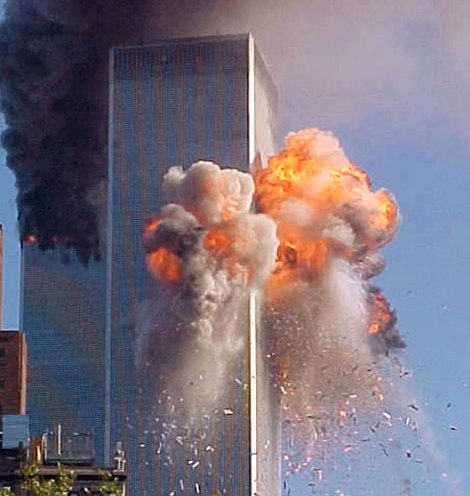
On September 11, 2001, I was sitting in Jefferson, Iowa. Carol and I were in the process of moving from Virginia Beach to Southern California. As I checked emails, Uncle Phil said, “Larry, look at the television.”

What I saw stunned me: New York’s Twin Towers being hit by two airplanes. Even as I watched I couldn’t grasp what was going on. How could this happen to America? I thought.

The Holy Spirit spoke to my heart later that day: “America is at war!”

After seventeen years, I now realize that the war I thought was just against terrorism and Al-Qaeda is far greater than that. Every part of America is under attack. Our culture. Our political system. Our faith. Our future. Everything.

And sadly, America doesn’t realize who is behind all of this.

For thus says the LORD of hosts: “Once more (it is a little while) I will shake heaven and earth, the sea and dry land; and I will shake all nations, and they shall come to the Desire of All Nations, and I will fill this temple with glory,” says the LORD of hosts. (Haggai 2:6)

My prayer today:

Lord, open our eyes and move on our spirits so that we turn to You with all of our hearts, with fasting, with weeping, and with mourning. So that we rip our hearts apart in grief for our sins rather than just going through some more religious motions. Help us, O Lord, to return to You, believing You are gracious and merciful, slow to anger and of great understanding, and desire to offer us a reprieve. (Based on Joel 2:12-13)

What do you think and has the Lord spoken to you today?

Join with me to fast and pray for America.

4 Comments

Filed under America, Calamities, Christianity, Church, Fasting, Forgiveness, Gifts of the Spirit, Judgment, Prayer, Prophecy, spiritual warfare

The Apostles: Men Condemned to Death (Part 1)

Praying


“He’s dead! He’s dead!” exclaimed the courier from Rome as he walked toward us.

I stopped working and stood up. The other tent makers did the same. “Who’s dead?” I asked.

“Paul’s dead,” said the courier, wiping the sweat from his forehead. “He was beheaded in Rome about a month ago.”

Even though I knew the Apostle Paul’s ministry would eventually have a sad ending, the news stunned me. O Lord, why? I thought.

I turned away from the group, not wanting to talk about the apostle at that moment. It was just too painful. I walked down to the Aegean Sea and sat on a rock, hoping to sort out my emotions and thoughts. There, I looked back over my years with Paul.

The first time that I met Paul, I was not impressed. His stature was puny, only 4 feet 6 inches tall and 120 pounds in weight, and his public speaking skills were  limited when compared to Apollos and the other orators. Yes, he was brilliant and could write, but these were facts that I learned later and did not figure into my first impressions of him.

Yet, there was something about Paul which drew me to him. Maybe, it was his fiery passion for the gospel or his fierce boldness or his love for the church. I can’t put my finger on it, but anyway, I joined up with Paul and traveled along with him as his aide.

On our first journey to Rome, we ended up swimming in the Mediterranean Sea. Somehow, the Roman soldiers did not execute us and we were able to swim ashore to Malta. We eventually arrived in Rome.

Next, I spent two years, waiting for Paul while he was under arrest. When we finally resumed traveling again, everything became a blur of afflictions, hardships, distresses, beatings, imprisonments, tumults, labors, sleeplessness, and hunger.

Then, the fire in Rome changed everything for us Christians, from bad to worse. Believers were blamed for the fire and Paul became a marked man. Nero sent soldiers to hunt him down in Asia.

The stress wore me down. I couldn’t take it any longer.

“Paul, I didn’t join your ministry to be killed by Roman soldiers,” I said on the day of my departure. “I’m going to Thessalonica, start a business, maybe marry a young woman, and start a family. I haven’t really enjoyed life yet.”

Paul was disappointed, but what could he do? I fled on a boat.

It had been almost two years since I last saw Paul and now he was dead. My mind wandered here and there as the blue waves splashed against the rock I sat on.

Did I make the right decision when I left the Apostle Paul? I wondered.  And how will I be remembered by future Christians?

For Demas, having loved this present world, has deserted me and gone to Thessalonica…(2 Timothy 4: 9)

Demas’ decision has earned him a shameful legacy in the Bible for all to read. But still, before we are too hard on Demas, we should consider how we might have dealt with an apostle like Paul.

(Continued in Part 2)

4 Comments

Filed under America, Apostles, Christianity, Church, Gifts of the Spirit, Kingdom of God, Prayer, Prophecy, spiritual warfare