My oldest memories of Easter include new clothes for my sister and me, maybe going to church, eating a feast at my grandma’s house with our relatives, and having a great time.
So, why do I struggle with Easter?
My birthday is February 9, but let’s say that everyone has decided to celebrate it on February 16 instead, even though everyone knows it’s really the 9th. Wouldn’t that be ridiculous?
But celebrating a birthday on the wrong date is no less ridiculous than our celebration of Easter!
First of all, Jesus did not die on a Friday. This would not have fulfilled His prophecy to Himself:
For as Jonah was three days and three nights in the belly of the great fish, so will the Son of Man be three days and three nights in the heart of the earth. (Matthew 12:40)
Jesus was most likely crucified on the Wednesday just before Passover which fell on the following day of Thursday and then a Sabbath on that Friday. In other words, two Sabbaths in that week. This would fulfill Jesus’ prophecy of three days and three nights in the grave. (Remember: The Jewish calendar records a day as beginning at nightfall, not at midnight like the Gregorian calendar.)
Okay, but why was Jesus crucified at this time?
Now the blood shall be a sign for you on the houses where you are. And when I see the blood, I will pass over you; and the plague shall not be on you to destroy you when I strike the land of Egypt. (Exodus 12:13)
For fifteen hundred years, Jewish families had selected a year-old lamb without blemish each year to celebrate the feast of Passover, which the Lord had commanded them to do. This feast was a sign and shadow of what Jesus would eventually become — the perfect Passover Lamb for all of us.
Now, we all know that Jesus is the Passover Lamb and not the Easter Lamb, right? So, why do we celebrate Easter rather than Passover?
Is it because we don’t want to break our man-made traditions? Is it because we believe Passover is too Jewish for us Christians?
For He Himself is our peace, who has made both [Jew and Gentile] one, and has broken down the middle wall of separation, having abolished in His flesh the enmity, that is, the law of commandments contained in ordinances, so as to create in Himself one new man from the two [Jew and Gentile], thus making peace (Ephesians 2:14-15)
If Christians ever hope to become the “one new man” in Christ, we’re going to have to get rid of some of our traditions, one of them will probably be Easter.
Paul started a church in Philippi and stayed there until he cast a spirit of divination out of a slave girl. This upset the girl’s masters who profited from her fortune-telling. A riot broke out, ending up with Paul and Silas being thrown into a Roman prison and beaten.
Another riot forced Paul and Silas to leave Thessalonica and travel to Berea.
The above is the background for the founding of the Thessalonian Church and Paul’s two letters to them.
But concerning the times and the seasons, brethren, you have no need that I should write to you. For you yourselves know perfectly that the day of the Lord so comes as a thief in the night. (1 Thessalonians 5:1-2)
Let no one deceive you by any means; for that Day will not come unless the falling away comes first, and the man of sin is revealed, the son of perdition…Do you not remember that when I was still with you I told you these things? (2 Thessalonians 2:3,5)
Thus, it wasn’t like he taught every day or every night. Maybe just on the Sabbath and another evening or two during the week.
Yet, Paul’s message included meaty teachings on the end-times and the Day of Christ’s return because in his followup letters to the Thessalonians he wrote that “he didn’t have to write about times and seasons, Day of the Lord, falling away or the man of sin (Antichrist). Why? Because he had already taught them on this subject.
Okay?
If the Apostle Paul thought the end-times were important enough to take up his valuable time teaching new converts, shouldn’t we also place an emphasis on them?
Do you realize Jesus also placed an importance on end-times teaching?
So when you see the abomination of desolation spoken of by the prophet Daniel, standing in the holy place (let the reader understand) (Matthew 24:15 ESV)
See you next time when we will begin digging into the end-times.
My parents were staunch Republicans. They were not thrilled with Presidents Truman, Kennedy, and Johnson, but I can never remember them calling these presidents unkind names. They respected the office.
But today, we have Facebook, Twitter, Instagram and other social media outlets. Anyone can air his views to an audience, without leaving his home. All he has to do is write his viewpoint, or share one he likes from another person, and then hit the “share” button.
I have read some where President Obama was called the Antichrist and President Trump was called a racist. Neither of these are true. Period.
The sad thing is that quite a few Christians join in this madness. The Bible specifically warns us not to do this.
You shall not revile God, nor curse a ruler of your people. (Exodus 22:28)
The Lord knows how to deliver the godly out of temptations and to reserve the unjust under punishment for the day of judgment,and especially those who walk according to the flesh in the lust of uncleanness and despise authority. They are presumptuous, self-willed. They are not afraid to speak evil of dignitaries (2 Peter 2:9-10)
Likewise also these dreamers defile the flesh, reject authority, and speak evil of dignitaries. (Jude 8)
Christians are called to pray for our leaders, not to slander, gossip or speak evil of them. If we continue in this madness, we can expect God to judge us.
My prayer today:
Lord, send the Spirit of the fear of the Lord to convict American Christians of our words against leaders and those in authority so that our tongues are tamed and the words of our mouths are acceptable in Your sight. (Based on Isaiah 11:2, James 3:8 and Psalm 19:14)
Join with me on Thursdays to fast and pray for the Body of Christ in America.
If you are reading this, then I’m dead and will forever remain sixty-six years old.
If you are a searcher, looking through the rubble for survivors or their remains, thanks for trying. I appreciate your efforts. If you are a looter who picked up my MacBook Air because you wanted it, consider the laptop a gift from me. I won’t need it anymore. But whatever your reasons, it makes no difference because I’m dead and just glad someone is reading my story.
Oh yeah, my name is Jackson Edwards.
Maybe I better get on with it because I’m drifting off more and more because of the pain.
It all began when my doorbell rang a few months ago.
Ding. Dong.
I hit pause on the TV remote and stood up. My sciatica and arthritis ached more than usual so I stretched myself, hoping to work out the kinks, before reaching for the doorknob. Halloween had passed two weeks earlier, but I still took no chances and looked through the peephole first. I saw my bearded neighbor standing in the hallway and opened the door.
“Monsieur Roberto,” I said with a lousy French accent.
“Si vou ples, Monsieur Jackson,” he said in his own second rate accent, pointing toward the living room.
“Come in, my Charismaniac friend.”
He laughed and walked into the living room and sat down on the sectional. I followed and sat on the opposite side of the coffee table in the leather recliner.
“I don’t know where to begin,” he said, rubbing his hands together.
His blue eyes checked out the oak floor that his jogging shoes rested upon. Something bothered him.
“What’s wrong?” I asked. “Don’t you usually start with John 3:16 and work your way through the rest of the Bible when you come here?”
“Hey, man, I’m sorry if I’ve ever whacked you over the head with my Bible.”
“Just yanking your chain, Dr. Bob.”
He sighed.
“Okay, but I still don’t know where to start.”
“Why not at the beginning? It’s only 7 p.m. and we have all night.”
He nodded and rubbed his forehead with a hand.
“Do you remember four years ago when I told you about a vision a Christian woman had about a gigantic ocean wave hitting Japan? Do you remember that?”
“Vaguely,” I whispered, not being totally honest because I remembered the story quite well. In fact, I even did research on Google and discovered numerous other warnings spoken ahead of time about the tsunami.
“Okay,” he said. “Well, this same woman just had a vision of a nuclear blast hitting us here in San Francisco ─”
“Really?”
“Yes, and not only that, a prophet friend from Albuquerque called and told us a disaster would soon hit the Bay Area. He recommended we should pack up and leave now.”
“Hmm,” I said, leaning forward in the recliner. “What are you going to do?”
“Mary and I sold our condo today, furniture and all. We’re moving to an area near Tahoe.”
“What about your medical practice? And your two kids?”
“My two partners bought out my share and we’ll homeschool our kids.”
Everything moved too fast to grab a hold of what he was telling me.
“Well, it’ll take sixty days or so for everything to close, right? So, we’ll have plenty of time to talk in the future.”
I stood up, hoping to end this uncomfortable conversation.
“No, sadly, we won’t. I made cash deals and sold everything for sixty cents on the dollar.”
I fell backwards into the recliner and shook my head.
“You took a four hundred-thousand dollar loss on your condo?”
“I would have given it away if I had to.”
I opened my mouth and closed it. How do you challenge a person who is willing to turn his back on a fabulous way of life in the city he loved? I know I could never have done it. It had been too hard building a forty-year career in Silicon Valley to end up tossing it away. And a million-dollar condo on Nob Hill? That would have been a laughable goal back in the days of my youth, living in the inner city of Oakland.
“Is this goodbye?” I asked.
He nodded and stood up, offering his hand to me. I stood and shook hands with him.
“Listen, Jackson, why don’t you come along with us? Mary and I really feel some bad things are going to happen in San Francisco and we don’t want anything to happen to you. We love you.”
“No way, I’ll take my chances here on Nob Hill,” I said, shaking my head. I winked my eye and added, “Just remember, my white Charismaniac friend, I’m still one of them jive-talking, hustle-or-die blacks from the inner city. We know how to survive.”
In 2 Thessalonians Chapter 2, Paul answered questions about a misunderstanding the church had about the Day of the Lord and whether it had already come.
Paul replied:
Let no one in any way deceive or entrap you, for that Day will not come unless the apostasy comes first [that is, the great rebellion, the abandonment of the faith by professed Christians], and the man of lawlessness is revealed, the son of destruction [the Antichrist, the one who is destined to be destroyed] (2 Thessalonians 2:3 AMP)
Okay, think about this for a moment: Jesus will not return and rapture us until after there is a great rebellion by professed Christians who then walk away from their faith.
…because they did not receive the love of the truth, that they might be saved. And for this reason God will send them strong delusion, that they should believe the lie that they all may be condemned who did not believe the truth but had pleasure in unrighteousness. (2 Thessalonians 2:10-12)
This is not written to argue the point one way or another whether the great falling away involves born-again Christians or in-name-only believers. I’ll let God sort that out.
But it’s written to remind us to pray for our loved ones and neighbors before it is too late.
My prayer today:
Lord, send the Spirit of Truth to open up the hearts of our loved ones and our American neighbors so that they receive the love of the truth and are saved. (Based on John 16:13 and 2 Thessalonians 2:10)
After his rebellion, being thrown into the Sea, swallowed by a great fish and then vomited onto land, Jonah showed up in Nineveh, the capital of Assyria.
Can you imagine the hungry and thirsty cries of babies, children and animals filling the air in Nineveh? It had to be almost deafening. What an extreme reaction to a prophet’s proclamation!
When God saw what they had done and how they had put a stop to their evil ways, he changed his mind and did not carry out the destruction he had threatened. (Jonah 3:10 NLT)
What if the King of Assyria had decided to check out Jonah’s credentials before deciding what to do? Or what if the King wanted to talk it over with his religious aides first? Or what if the King wanted to just wait and see before he acted?
Nineveh would have been destroyed. It took an extreme and immediate response to stave off the city’s destruction.
Will the Lord send last-call prophets, like Jonah, to America before removing the nation from before His eyes because of abortion?
(Continued in Part 6…but if you want to read all of the parts to date, you can go here.)
If I asked most Christians what happened in Acts 2 of the Bible, they’d answer: “The one hundred and twenty disciples waiting in the Upper Room in Jerusalem were filled with the Holy Spirit and they all spoke in tongues.”
That’s true, but did you also know that Peter prophesied a message for us Twenty-First Century Christians?
“In the last days,” God says, “I will pour out My Spirit upon all people. Your sons and daughters will prophesy.Your young men will see visions, and your old men will dream dreams. In those days I will pour out My Spirit even on My servants—men and women alike— and they will prophesy.“ (Acts 2:17-18 NLT)
How many of our sons and daughters are prophesying? And if we consider ourselves servants of the Lord, how many of us are prophesying?
Now, if you’re thinking all of Peter’s prophetic words were fulfilled on that first Pentecost in 30 AD, then you need to look at the next part of his prophecy:
“And I will cause wonders in the heavens above and signs on the earth below— blood and fire and clouds of smoke. The sun will become dark, and the moon will turn blood red before that great and glorious day of the Lord arrives.” (Acts 2:18-19)
So far, we have not seen the sun darkened and the moon turned to blood, right?
If we look at Peter’s prophecy and consider the questions I have raised, that means Peter’s prophecy has only had a limited fulfillment so far.
Lord, we believe we are living in the last days so we ask You to pour out Your Spirit of prophecy on our sons and daughters and on every one who is Your servant. (Based on Acts 2 and Revelation 19:10)
Join with me on Thursdays to fast and pray for prophetic voices to arise in America.
A couple of weeks ago, I had one of those dreams which seemed so real that it felt like I was really there.
In the dream, I was walking along a sidewalk through my neighborhood during an early summer evening. The temperature was perfect and the sky was clear.
As I walked, a pretty daughter of a high school friend approached me. She was wearing an attractive, but conservative blouse and skirt outfit. She stopped and we chatted a bit. I didn’t really think anything was out of the ordinary until she embraced me with her arms. I did the same to her. Our hands groped each others’ bodies in all of the wrong places.
While this was happening, I thought, “What’s happening here? I’m twenty-five years older than her.”
Yes, we were passionately carrying on, out in the open on that sidewalk in front of our neighbors, but that didn’t seem to bother us.
Finally, she said, “I want to go home and change into something more comfortable. Let’s meet at such-and-such place.”
I agreed to meet her there.
When she left, all I could think about was that I was about to commit a sin — a big one!
Next, I began heading toward our meeting place, which happened to be a steep downhill walk for me. I cried out to the Lord as I moved along. “Forgive me, Lord! Pour out Your grace on me! Stop me before I fall into deeper sin! Help me, Lord! Help me! Help me!”
I kept walking. My prayers did not stop me.
I looked ahead and saw the pretty daughter at the bottom of the hill, awaiting me. She looked beautiful, luscious and inviting.
Not knowing what else to do, I began fighting with spiritual warfare prayers. “In Jesus’ name, I command the spirit of sexual immorality to go from me right now! Go in Jesus’ name.”
My spiritual warfare prayers did not help. I kept walking toward her.
I was only a few steps away when I tossed out a last resort prayer. “Lord, I plead the blood of Jesus over me and over this terrible situation.”
Bam!
I was set free and transported by the Spirit out of that seemingly hopeless situation to a place of peace and safety.
And they overcame Satan by the blood of the Lamb and by the word of their testimony, and they did not love their lives to the death. (Revelation 12:11)
After the Azusa Street Revival, the critics of the early Pentecostals called them “blood obsessed.” Why? Because these early Pentecostals sang about the blood, preached about the blood and pleaded the blood over almost everything in their lives. They had a deep revelation about the power in the blood of Jesus.
For most, that revelation is not so strong in us today.
Pastor Jack Hayford says about pleading the blood of Jesus:
There is no circumstance in life to which the blood of Jesus isn’t key to God’s releasing, protecting, resolving power, whether it’s removing the potential of confusion, overcoming the impact of rebellion, breaking the torment of fear, or the shame of the past. When we “plead the blood,” we are to do so in the understanding sense, with the firepower of the supernatural, and on the basis of the body of evidence that through the blood of Jesus Christ, all hell has been broken in its power, all sin neutralized, the power of death overwhelmed, and every human need paid for once and for all. (See Hayford’s powerful teaching on pleading the blood here.)
Because of my dream, I now plead the blood of Jesus often.
Hey, why not use the “firepower of the supernatural” to help us walk with Jesus?
The video is 11 minutes and 21 seconds long. It is well-worth listening to, but for those who would rather read than listen, I have written out his dialog:
Moderator: How do you respond to unbelievers who say Christians are hateful toward people who support lifestyles that are not according to the precepts of our faith?
Zacharias:Very important question. I would be a dishonest person if I told you I don’t think about that question or worry about it. In fact, our speakers’ team has sat around a table and asked, “How do we deal with this question, the trying social issue of our time.” And even if the word is not used in the question – the homosexual lifestyle and all that has come about in our lifetime. How should Christians deal with it?
Let me give you three panels for an answer on this, okay?
The first panel is the logical or sociological problem. The second panel is the theological problem. The third panel is the relational problem – how do you communicate it.
So, first, let’s take the sociological issue here. What is the problem now? We talk about tolerance.
I was speaking at a prestigious university and someone walked to the microphone and asked this same question about homosexuality.
I said to this person, “I will be glad to answer your question if you first answer mine. What kind of culture are we living in right now? You have to define it for me.
“I see three cultures in relation to absolute.
“The first culture is called a Theonomous culture where the Law of God is so embedded in our hearts that we all think in the same way.
“Once, upon a time, we talked about the natural law as in “we believe these truths to be self-evident. The early framers believed in the natural law. We don’t believe in natural law anymore nor do we believe in the Theonomous culture in the West.
“So, what’s the second culture?
“It’s a heteronomous culture. This means that the mainstream of a culture is dictated to by the top or its leaders. If you look at Marxism in secular terms, it is a heteronomous culture with the handful at the top controlling the masses. If you look at Islam, it is a heteronomous culture. The mullahs or sheiks or ayatollahs at the top tell the masses when they can eat, what they must wear, who they can be seen with and so forth. It is a heteronomous culture with the few at the top dictating to the masses below them.
“So I looked at the questioner and I asked, ‘Are we a Theonomous culture?’ He said, ‘No.’ ‘Are we a heteronomous culture?’ He said, ‘No.’
“That leaves with us the third which is an autonomous culture, which means each person dictates their own moral prerogatives. So, I asked him, ‘Are we an autonomous culture?’ He said, ‘Yes.’
“Okay, if we are an autonomous culture and I answer your question, are you going to give me the privilege of my autonomy, too? Or as soon as you disagree with my answer, will you switch to a heteronomous mode and dictate for me what I must believe as well?”
That is the sociological dilemma.
If A disagrees with B, A wants to enforce his principles on B. Not only that, B wants to do the same to A. So there is a mutual autocracy being sought here.
But it will never be consistent in a culture that is neither Theonomous or heteronomous because everyone has their own autonomy. That’s the sociological issue.
Now, the theological issue.
Years ago, I did some forums at Indiana University. At one, a reporter came and asked if she could film some of our program that night. I said yes. She only planned to stay for a part of the program, but ended up staying for all of it, even the question and answer period afterward. She ended up walking with me back to my lodging on campus.
The reporter asked, “I have a question for you.”
“Is this an on-the-record question or an off-the-record one,” I replied.
She said, “No this is just for me. It will not appear in print.”
“Okay,” I said. “Go ahead and ask.”
She said, “I have a problem with Christianity. Christians are generally against racism, but when it comes to homosexuality, they discriminate against the homosexual. How do you explain that?”
“I find your comments so interesting,” I said. “In the first part of your question, it’s an -ism you’re talking about. In the second part of the question, you particularize it with an individual. That fascinates me.
“The reason we believe ethnic discrimination is wrong is because the race and ethnicity of a person is sacred. You do not violate a person’s race or ethnicity. It’s a sacred gift.
“And the reason we believe in an absoluteness to sexuality is that we believe sexuality is sacred. You will help me better understand your question if you tell me why you treat racism as sacred and do not do the same for sexuality.
She replied, “I never thought about it in those terms.”
Here’s what I want to say to everyone: marriage as God has given it to us is the most sacred relationship you will ever enter. Love is given one word in the English but it has four words in the Greek: agape, philio, storge and eros. Agape is God’s love. Philio is friendship or brotherly love. Storge is protective or parental love. Eros is romantic love.
Marriage is the only one that pulls these four loves together. And if you take agape out of this mix, eros is gone. Romantic love will become redefined.
For believers, the Bible gives the sacredness of marriage as God gives Christ to the church, the bridegroom and the bride. In the sacredness of the beauty of that consummate relationship between a man and a woman in the singular marital vow: “I do and I will…” When you say I do to the one, you say I don’t to all of the others. When you say I will to one, you say I won’t to the others.
Any departure from this beauty and sacredness of the full union of love is against the biblical notion of what it really means to be married. Just to take one behavior and make it look like it is aberrant is not right. All departures from this model of a man and woman are not right in the sight of God.
The theological position is a consummate relationship between a man and a woman in the procreative act and the sacredness and paying each other the ultimate compliment of taking each other at his or her word.
Theologically, we are put in a conundrum. So, how do we deal with it? This is the hard part.
I accept people with a love and genuineness on anything if their views are different than mine. I have learned to love humanity. I can put my arm around a person who has a different view on marriage.
God gives us the most sacred gift: the prerogative of choice. But God does not give us the privilege of determining a different outcome of what the choice will entail for us . Consequences are bound to the choice.
That brings us back to the Book of Genesis 4:7, where it says, “If you do what is right, you will be accepted, but if you don’t, sin crouches at the door and desires to have you.”
When I look at the sacredness of marriage, any change from the biblical point of view is a departure from the biblical mandate. But at the same time, the Bible commands us to love even those we disagree with. Our responsibility as a church is to never to hate individuals. Our privilege is to love. Only God can change the heart of a person and He is the ultimate judge. Let us be light, salt and learn to love one another and let God be the judge. We can make errors and He does not.
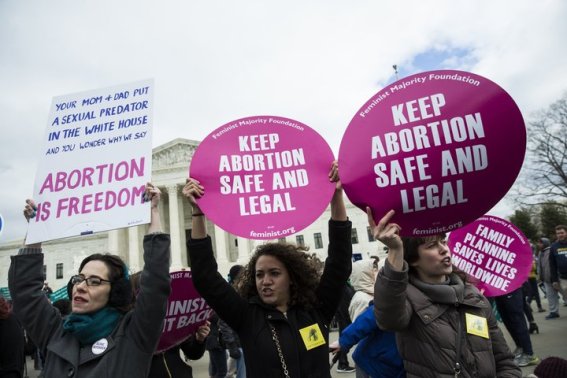
How can a mother abort her baby? How can a medical doctor, who has sworn an oath to help people, justify murdering babies? How can politicians vote to destroy future Americans? How can a third of Christianity endorse abortion as being okay alongside their faith values?
Let me share a part of my testimony:
In 1995, my life was a shambles. Deep in debt. Not many job prospects or friends. Alone and lonely. Each day was a grueling nightmare just like the day before. Nothing seemed to change in my life no matter how hard I prayed, fasted or tried.
On one wintry afternoon, I was reading a biography on John Lake. As I read about this mighty man of faith, I became fed up with God and His ways. I put the book down and looked up to heaven. “God if You are such an almighty big God, then how come You don’t help me? Aren’t You big enough?”
I picked the book back up and continued reading.
All of a sudden, the Holy Spirit rushed into the room. He didn’t show up to snuggle with me or pat me on the head. He showed up in His fearful holiness.
As soon as I felt His holy presence, my knees hit the floor. “O God, don’t kill me! Please, don’t kill me! Please, God!” I prayed over and over again.
In the midst of my jabbering, I heard the Lord speak to my heart, “If I wanted to, I could handle your problems today.”
“O Lord, I believe You. Forgive me, but please don’t kill me,” I said aloud.
The fearful holiness of the Holy Spirit lifted off me, but in my heart, a fear of the Lord remained an integral part of my spiritual makeup.
The fear of the LORD is the beginning of wisdom…(Proverbs 9:10)
The fear of the LORD prolongs days… (Proverbs 10:27)
...by the fear of the LORD one departs from evil. (Proverbs 16:6)
Fear of the Lord would exist in a pious soul even if there were no punishment for sin. It dreads God’s displeasure, desires His favor, reveres His holiness, submits cheerfully to His will, is grateful for His benefits, sincerely worships Him, and conscientiously obeys His commandments. Fear and love must coexist in us so that either passion may be balanced and healthy.
You would think that the fear of the Lord would make me afraid of God or want to hide from Him, but that’s not true. I loved Him more than ever after that day.
Okay, so what?
I guarantee that if women, doctors, people involved in the abortion process, politicians, liberal Christians and others had a fear of the Lord as a part of their spiritual makeups, they would never opt for abortions or endorse them in any manner at all.
My prayer:
Lord, I pray the Spirit of the fear of the Lord would fall on America so that the name of the Lord Jesus would be magnified in our nation. (Based on Isaiah 11:2 and Acts 19:17)
(Continued in Part 5…but if you want to read all of the parts to date, you can go here.)